You get clients from YouTube in 2026 by creating problem-aware, search-driven videos, organizing them into a clear funnel, and embedding stage-appropriate offers directly into the content. You do not need a large audience. You need the right viewers taking the right next step.
Most B2B companies fail on YouTube for one simple reason. They treat it like a distribution channel instead of a discovery engine.
In practice, this shows up as four common mistakes that quietly block qualified buyers from ever reaching them.
YouTube is not a brochure.
When videos sound like corporate announcements or scripted product pitches, viewers disengage immediately. Buyers do not want positioning statements. They want clarity.
Effective YouTube for B2B marketing focuses on:
When you speak in your customer’s language, not internal jargon, YouTube understands who the video is for and viewers feel understood.
YouTube relies on pattern recognition.
When one video targets workflow automation and the next targets entrepreneurship or culture, the platform cannot determine who should see your content.
High-performing B2B channels:
Consistency is not about frequency. It is about clarity.
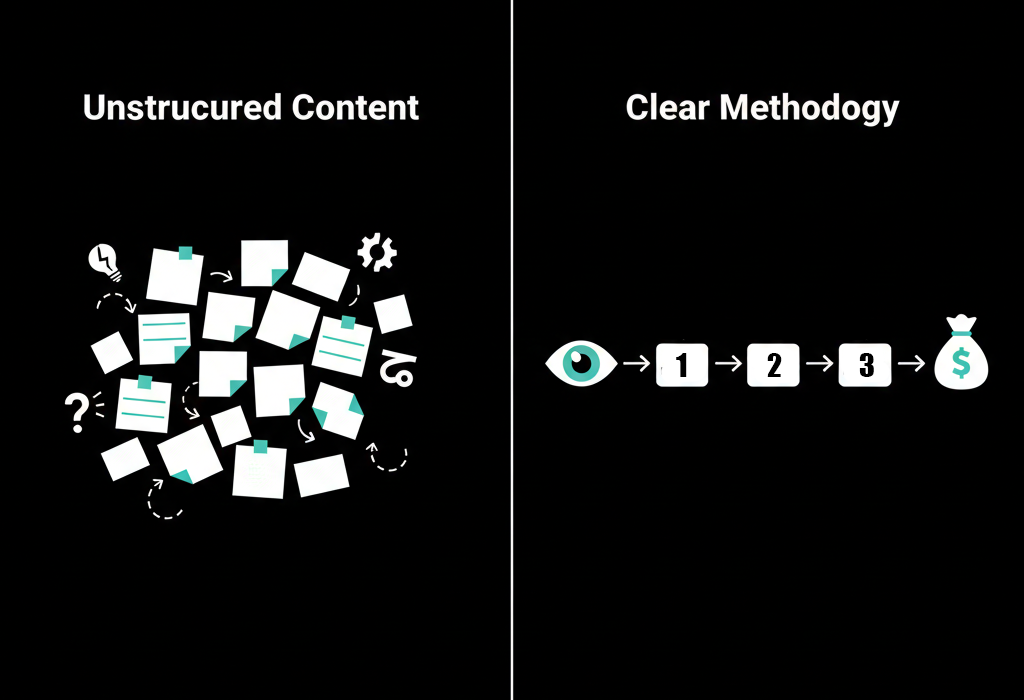
Unstructured content forces the viewer to do the mental work.
Even if your service is excellent, buyers disengage when ideas feel scattered or improvised. Clear structure builds trust.
Every video should follow a repeatable logic:
Methodology reduces cognitive load. Reduced friction increases conversion.
High-intent viewers do not need reminders to subscribe.
They need direction.
Ending a video with “thanks for watching” wastes the most valuable moment in the entire viewing experience. When interest is highest, you must tell the viewer what to do next.
Most companies try to be entertaining. Buyers are trying to solve problems.
Your ideal customers search for answers to:
This is where YouTube SEO best practices matter.
Instead of:
“Our New Inventory Dashboard Update”
Create:
“How to Reduce Stock Errors in Your Warehouse”
“Why Inventory Systems Drift Over Time and How to Fix It”
One title is about you.
The other matches buyer intent.
Search-driven, problem-aware videos are discoverable on:
That is how boring content turns into inbound demand.

Attention without direction does not generate leads.
A YouTube video funnel is the intentional path from discovery to trust to decision.
At this stage, buyers feel friction but cannot fully articulate it.
Examples:
The goal is recognition.
Buyers now understand the problem and want to evaluate approaches.
Examples:
This is where you teach your thinking, not pitch your product.
Here, buyers want proof and confidence.
Examples:
Decision-stage content builds certainty. Certainty drives leads.
Offers should match the viewer’s mindset, not interrupt it.
Low friction and educational:
Value-forward and comparative:
Clear and direct:
When offers align with intent, they feel helpful instead of salesy.
This is not a 30-day growth hack.
Most B2B channels see meaningful traction within:
The payoff is leverage. Once videos rank, they work continuously without increasing spend.