A startup should invest in YouTube when it has clear product market fit, a defined ideal customer, and repeatable sales conversations. At that stage, YouTube becomes a sales enablement tool that educates prospects before calls and helps generate inbound demand. Starting too early often amplifies unclear messaging and wastes resources.
Most founders approach YouTube by focusing on production details instead of business fundamentals.
Typical questions include:
• What camera should we use?
• Should videos be scripted?
• Should we film talking head videos or screen recordings?
• How often should we upload?
These questions matter eventually. But they are not the starting point.
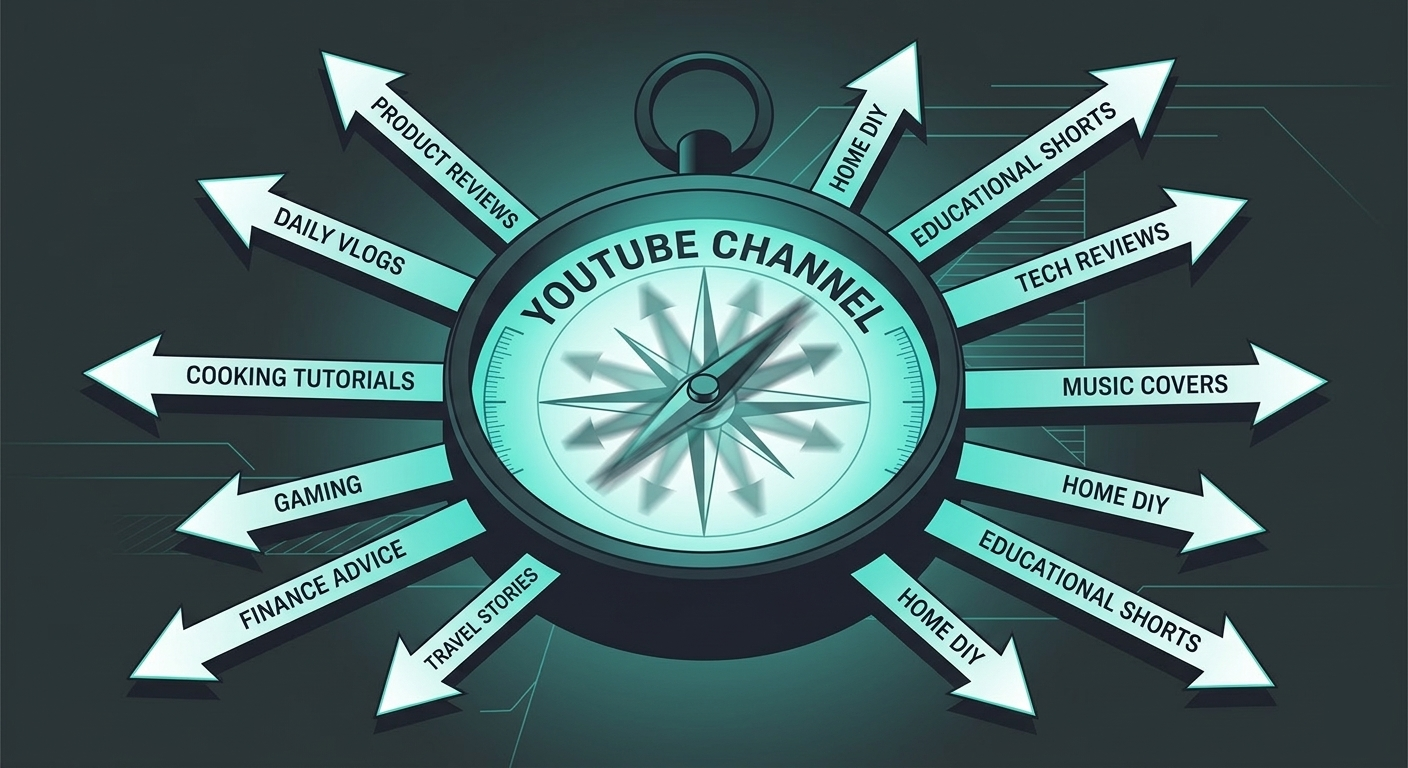
A strong YouTube marketing strategy begins with clarity around the business itself. YouTube is not a switch you turn on to generate growth. It is an amplifier.
If your positioning is unclear, YouTube simply broadcasts that confusion to a larger audience.
Before investing in video, founders should ask more fundamental questions:
• Do we clearly understand the problem we solve?
• Do we know exactly who needs our product?
• Are the pain points of our audience well understood?
• Do we have proof of work such as case studies or results?
Without these foundations, even high quality content will struggle to drive results.
This is why many early stage companies assume YouTube does not work. The real issue is usually timing.

YouTube often fails for startups that begin producing content before their messaging stabilizes.
A common pattern looks like this:
A startup raises funding.
They hire a marketer.
They decide to build a content presence.
So they launch a branded YouTube channel.
The problem is that the business is still evolving. The offer changes. The ideal customer profile shifts. Messaging evolves every few months.
As a result, every video communicates something slightly different.
This creates two problems.
First, the audience becomes confused about what the company actually does.
Second, the YouTube algorithm struggles to understand the channel’s focus, which makes it harder for the platform to recommend the content.
Eventually, the channel stalls and the team concludes that YouTube does not work.
But the platform was not the issue. The timing was.
YouTube becomes powerful once patterns appear in your sales conversations.
If every call with a potential customer feels different, YouTube may still be premature.
But if you begin hearing the same questions repeatedly, something important is happening.
Those repeated questions reveal:
• What buyers care about most
• What objections appear during the sales process
• What concepts prospects struggle to understand
At that moment, YouTube becomes a logical next step.
Instead of answering the same questions one call at a time, you can answer them once in a video.
The result is a scalable video content strategy for business that educates prospects before they ever speak with sales.
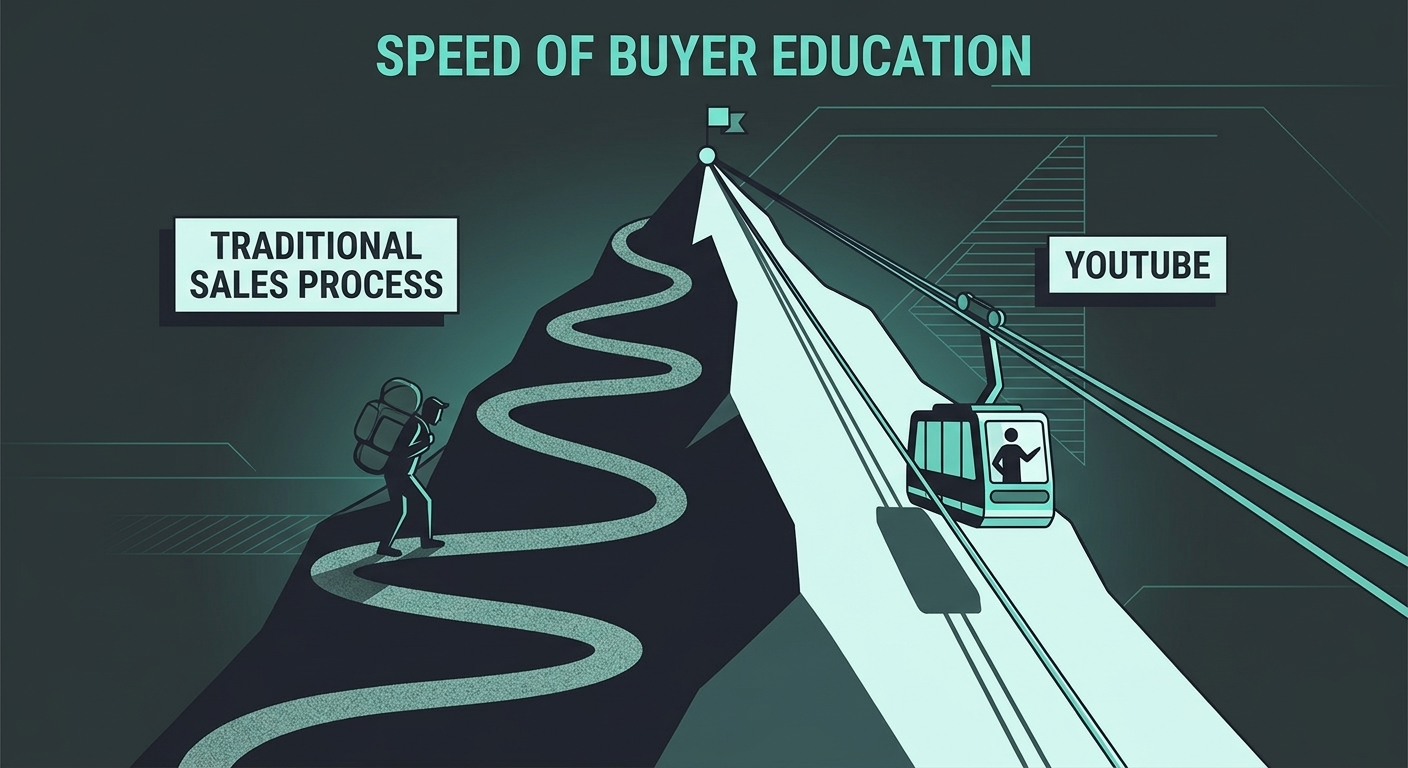
The most effective use of YouTube for B2B companies is not entertainment or brand awareness.
It is sales enablement at scale.
When YouTube works well, it changes how prospects arrive at conversations.
Before speaking with your team, prospects have already:
• Watched videos explaining the problem you solve
• Seen real examples and use cases
• Understood your point of view
• Decided whether your thinking resonates with them
That preparation dramatically changes the sales conversation.
Instead of starting with basic explanations, the discussion moves directly to the prospect’s unique situation.
Companies using YouTube effectively often notice:
• Shorter sales cycles
• Higher quality inbound leads
• More productive discovery calls
This is the foundation of effective YouTube lead generation.
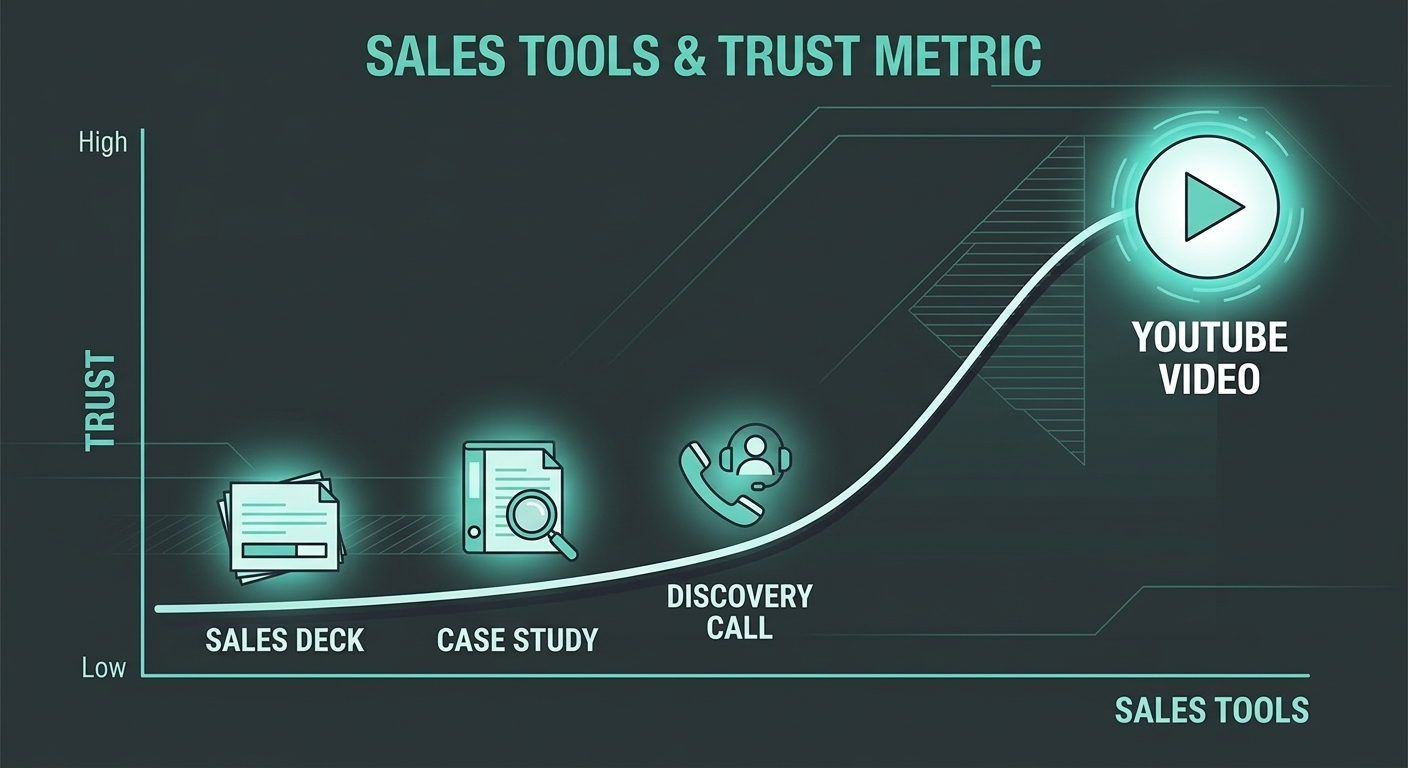
Most B2B companies rely on three traditional assets to build trust:
• Sales decks
• Case studies
• Discovery calls
These assets communicate information, but they rarely build familiarity.
Familiarity is what creates trust.
Video accomplishes this in ways written materials cannot.
When someone watches a founder explain a concept, break down a strategy, or analyze a real example, they begin to understand how that person thinks.
They see the reasoning process.
They evaluate whether the approach aligns with their own beliefs.
By the time the prospect schedules a call, it often feels like they already know the company.
This effect is why YouTube for B2B marketing is increasingly becoming a strategic channel for complex sales.
A well produced long form video can educate hundreds or thousands of prospects without requiring additional meetings on your calendar.
Timing determines whether YouTube becomes an asset or a drain on resources.
Starting too early creates several risks.
Messaging changes frequently.
Content quickly becomes outdated.
The team spends months producing videos that no longer reflect the offer.
This leads to lost time, lost focus, and inconsistent messaging.
However, waiting too long has consequences as well.
Competitors begin publishing educational content.
They become the familiar voice in the category.
They shape how buyers understand the problem.
Meanwhile, your team continues explaining the same concepts on every call.
The goal is not to rush YouTube.
The goal is to start when your message is clear enough to scale.
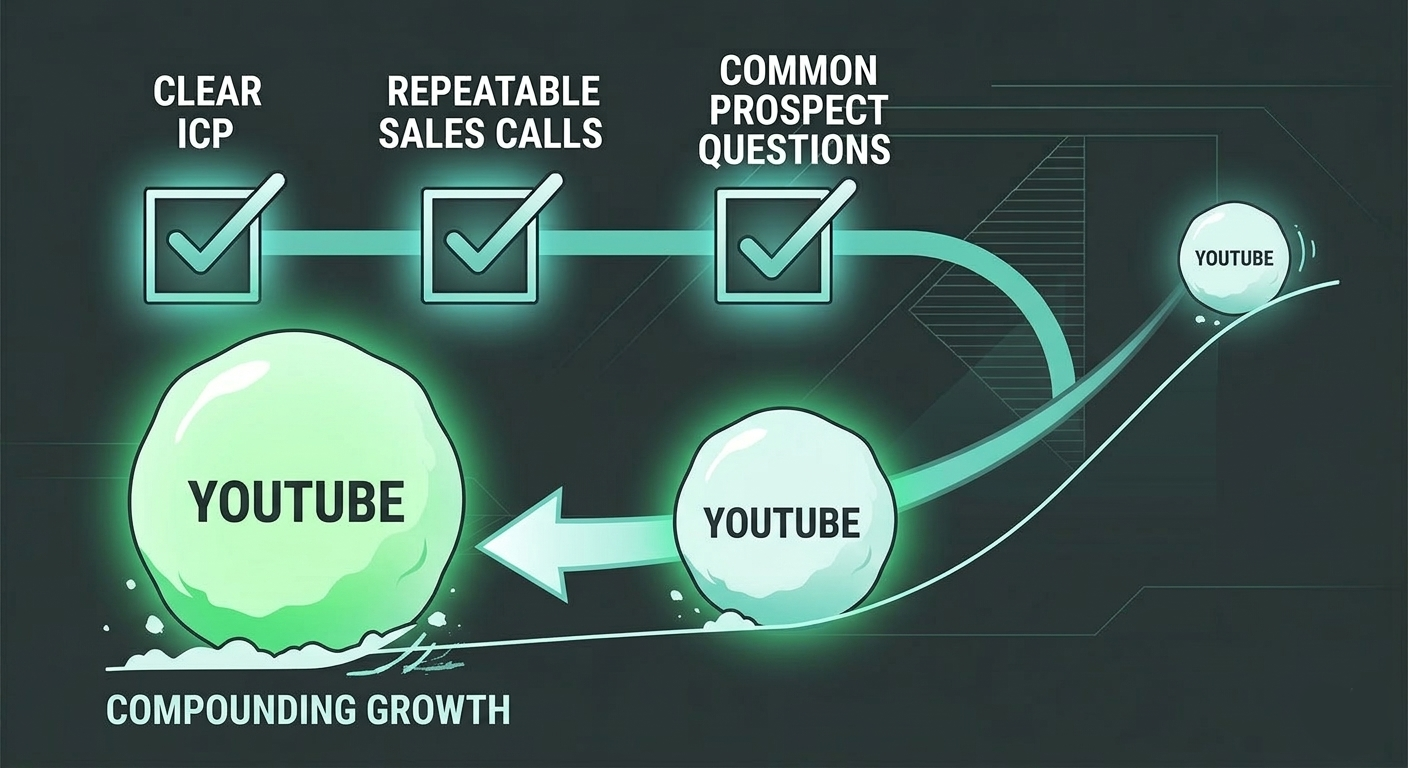
A startup is usually ready for YouTube when three signals appear.
First, your ideal customer can be described in a single sentence.
Second, your sales calls follow a predictable structure.
Third, the same questions appear repeatedly during conversations with prospects.
When those conditions exist, YouTube can support the sales process rather than distract from it.
At that stage, long form content becomes part of a broader YouTube video funnel strategy.
Videos educate buyers early in their research process.
Prospects arrive at sales conversations informed and aligned.
And the channel becomes a long term asset that compounds over time.
• YouTube amplifies your message, so unclear positioning becomes more visible.
• Many startups fail on YouTube because they start before product market fit.
• Repeated questions in sales conversations signal that YouTube can work.
• Video content can educate prospects before sales calls.
• Long form video builds familiarity and trust better than decks or PDFs.
• The goal is not to start YouTube early. The goal is to start at the right stage.
If your company is already posting on YouTube but not seeing meaningful results, the issue is rarely the platform itself.
Most of the time the challenge is strategy, positioning, or channel structure.
GrowthLens helps B2B companies turn YouTube into a predictable lead generation channel by aligning content strategy, SEO, and sales enablement.
If you want help evaluating whether YouTube can support your sales process, reach out to explore how GrowthLens can help generate leads from YouTube.