The Ultimate Guide to YouTube Lead Generation

When it comes to reach and ROI, YouTube is an unrivaled powerhouse. With over 2.5 billion monthly users, it stands as the world’s second-largest search engine (right behind Google). Unlike other platforms, YouTube is used for education and learning, not just scrolling for social updates. The result? Exceptional trust and return on investment: 98% of users say they trust YouTube creators more than those on any other social platform. In fact, businesses see an ROI 61% higher on YouTube than TV advertising (and 48% higher than other online video). If you’re considering a YouTube marketing strategy or developing a video content strategy for your business, these numbers make one thing clear: you can’t afford to ignore YouTube.

Still wondering why your business needs a YouTube channel? Read on – this guide will show how YouTube can build trust, drive qualified inbound leads, and lower your customer acquisition cost (CAC) in ways other channels simply can’t match.

Why YouTube Works for B2B Lead Generation

YouTube isn’t just for B2C brands or entertainment; it’s a goldmine for companies with high consideration products. Modern B2B buyers want to self-educate, and video is their preferred medium. Consider these eye-opening stats:

  • Massive Discovery Engine: Over 90% of people say they discover new brands or products via YouTube. In fact, YouTube is often the first stop for researching business solutions – it’s where your future customers are looking for answers.
  • High Influence on Decisions: 95% of B2B buyers report that video content plays a crucial role in shaping purchase decisions. Decision-makers are watching product explainers, thought leadership talks, and customer testimonials on YouTube before ever filling out a form or talking to sales.
  • Unmatched Message Retention: Viewers retain upto 95% of a message when they watch it in a video, compared to just 10% when reading text. That means your value proposition or solution benefits will stick with prospects far longer if delivered via YouTube. No blog post or whitepaper can compete with that level of engagement.

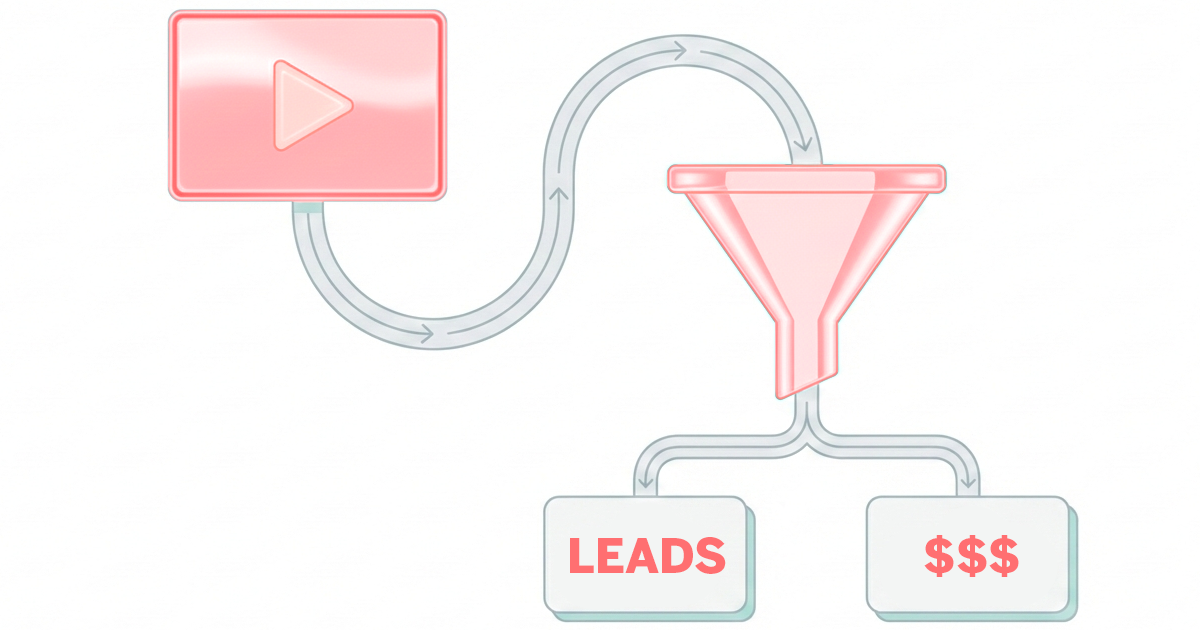
In short, YouTube combines the reach of a search engine with the persuasive power of video content. It’s the ideal platform to execute a top-of-funnel YouTube marketing strategy that educates your market (think: “video content strategy for business” how-tos) and a mid-funnel program that nurtures leads (think: case studies, product demos), all while building a subscriber base that you can tap into for ongoing revenue.

Buyers Are Self-Educating on YouTube

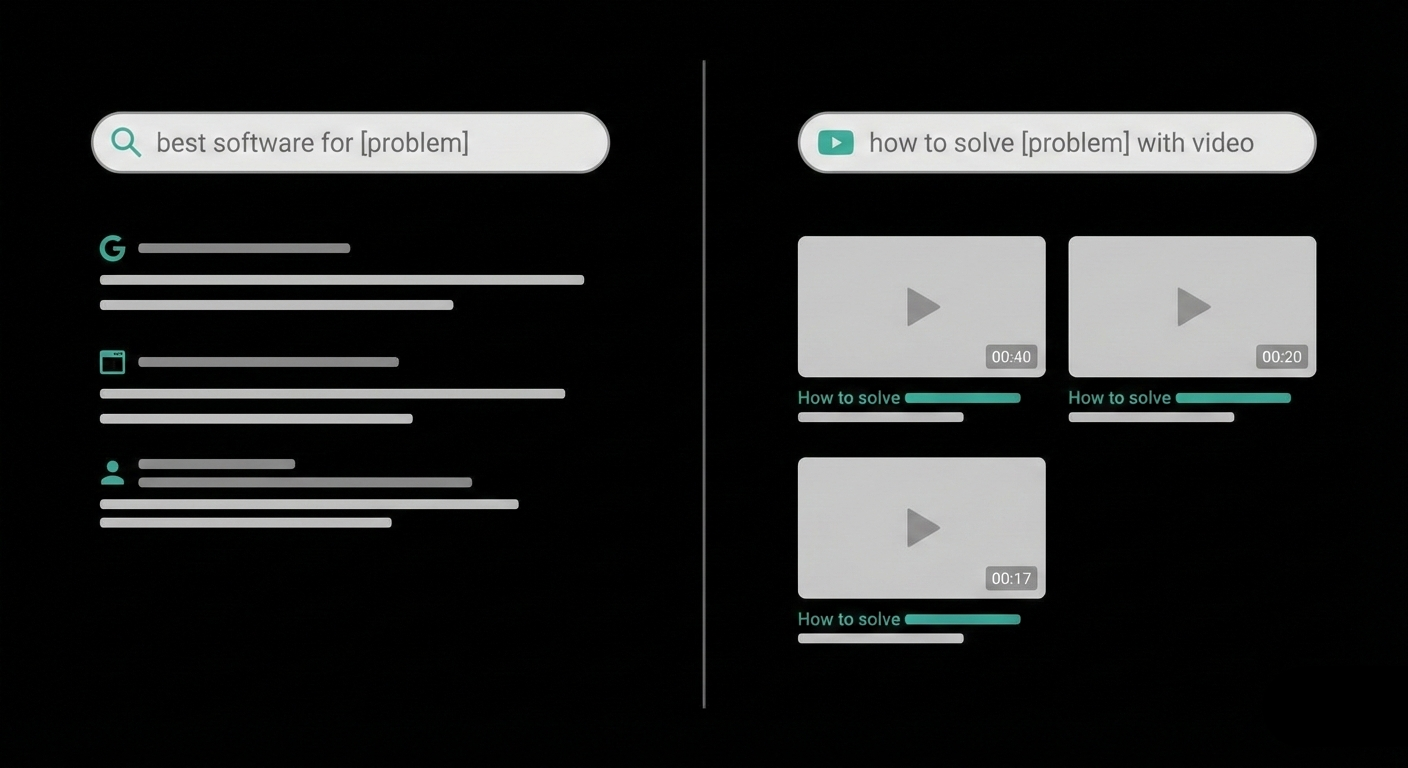
Split-screen illustration contrasting a general web search bar with a YouTube search.

Perhaps the most compelling reason to double down on YouTube for B2B lead gen is the shift in buyer behavior. Today’s B2B buyers prefer to research independently long before they ever speak to a vendor. In fact, the average B2B buyer is already 60% through the purchasing process before engaging a sales rep. And where are they doing this research? Often on YouTube.

Busy executives and technical evaluators alike turn to YouTube for explainer videos, reviews, and educational content. They might search for “how to generate leads from YouTube” or “why your business needs a YouTube channel” and find a helpful video (hopefully yours!). As Google’s own data shows, people worldwide use YouTube not only for entertainment but to discover new brands and learn about products or solutions. Buyers want to consume video: 60% of consumers prefer watching a product video over reading text, and by 2025 roughly 75% say they will choose video over text to learn about new services. This self-serve research trend means that if your company isn’t present with valuable videos, those buyers will consume someone else’s content and enter their funnel instead of yours.

YouTube’s role as an educational platform is so dominant that one agency found 90% of marketers credit video with helping them generate leads. Buyers trust content that educates over sales pitches, and YouTube is the perfect venue for that. When you consistently publish genuinely helpful videos (not just promos), you build credibility and can become the go-to authority in your niche. And when those educated viewers finally reach out, they’re highly qualified – they’ve essentially pre-sold themselves by consuming your content.

The Cost of Inaction: Missing Out on Leads (and Revenue)

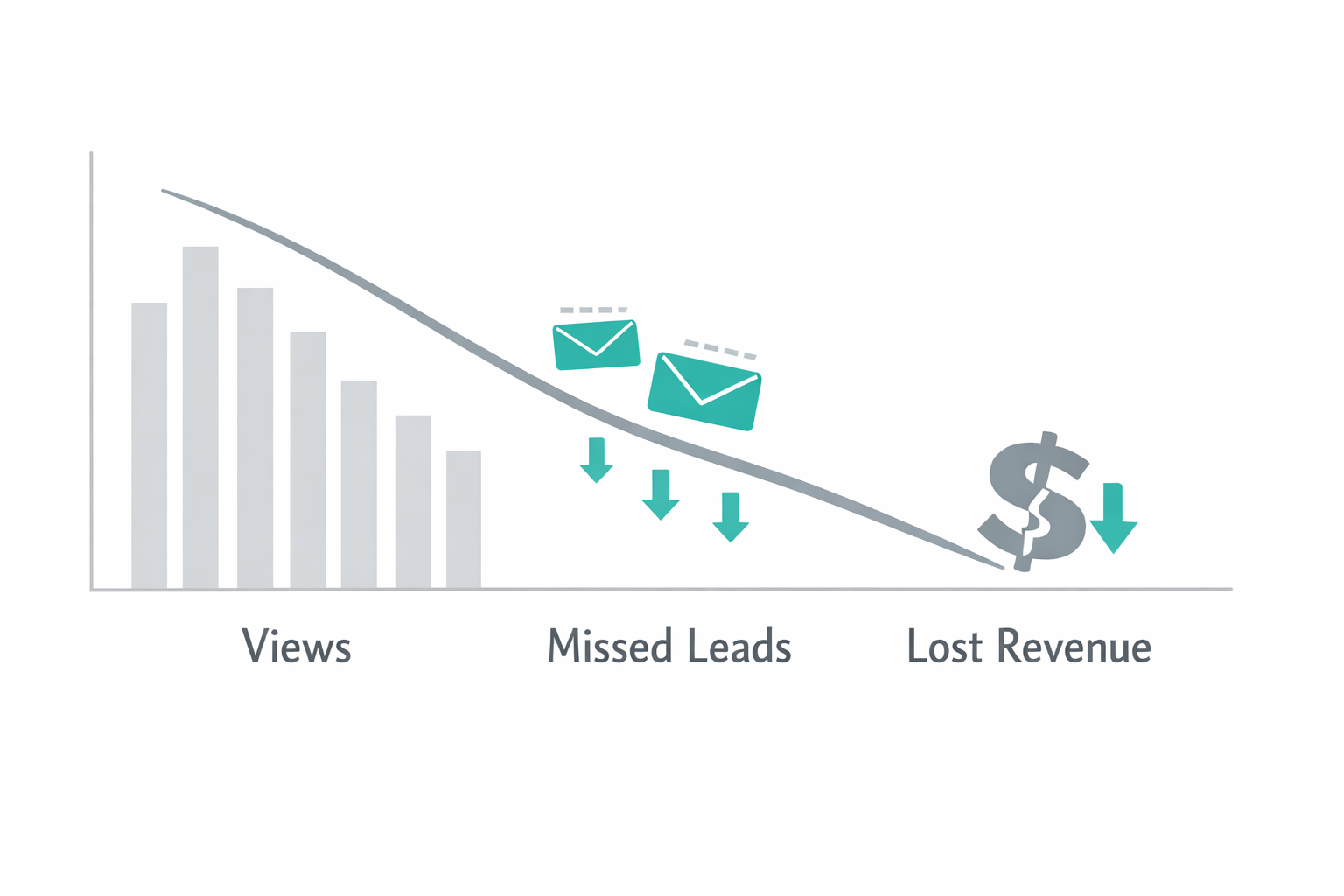
Minimal, flat infographic on a white background showing a downward-sloping line and muted gray bars progressing from “Views” to “Missed Leads” to “Lost Revenue.” Soft teal accents highlight missed opportunities, with envelope icons and downward arrows indicating lost conversions and revenue as views increase without action.

What happens if you don’t leverage YouTube for lead generation? In a word: opportunity cost. Every day your company isn’t engaging prospects on YouTube, you’re losing potential leads, sales, and market share. Let’s quantify the cost of inaction:

  • Missed Lead Opportunities: If your YouTube content isn’t optimized to capture leads, every viewer who clicks away is a missed opportunity. For example, suppose your channel gets 10,000 views a month but converts only 0.1% of those viewers into leads (common for an unoptimized channel). That’s 10 leads. With a strategic approach, you might convert 0.5% – that’s 50 leads, or 40 additional leads per month that you’re currently leaving on the table. Those hundreds of prospects annually are watching content in your niche somewhere – if not from you, then from a competitor.
  • Lost Revenue: Now, think bottom line. Let’s say your average lead-to-customer conversion rate is 10% and your average customer is worth $1,000. Those 400 extra leads could translate to ~40 new customers, or $40,000 in revenue per month that you’re not capturing. Annually, that’s nearly half a million dollars in lost revenue due to an underutilized YouTube channel. The cost of inaction isn’t just abstract “brand awareness” – it’s real pipeline and real dollars.
  • Wasted Marketing Spend: If you’re investing in creating content (blogs, webinars, social media) but not repurposing it on YouTube, you’re not maximizing ROI. Video accounts for 82% of all internet traffic, meaning a huge portion of your audience prefers consuming content via video. Not repackaging your best insights into YouTube videos is a waste of your existing content investments. Similarly, if you run YouTube ads without an organic strategy, you might be paying to send viewers to a dead-end channel that doesn’t convert – a wasted spend when a little optimization could turn those views into leads.
  • Competitive Disadvantage: Perhaps most importantly, ignoring YouTube cedes ground to your competitors. If your rivals are effectively using YouTube for lead gen and you’re absent, they’re busy building relationships with your potential customers. Over time, they’ll capture greater share of voice and search visibility. As one internal analysis put it, every month you wait, competitors already on YouTube “pull ahead” and make it harder for you to catch up. Companies that dominate their niche on YouTube accumulate subscribers, trust, and brand authority that newcomers will struggle to steal away. The longer you delay, the steeper the uphill battle becomes.

The takeaway: every B2B firm should treat a YouTube lead generation strategy with urgency. The cost of inaction – in lost leads, revenue, and competitive position – is simply too high. In the next sections, we’ll outline exactly how to execute a YouTube funnel that captures those leads and fuels growth (so you’re not reading a year from now thinking, “we should have started sooner”).

Funnel Strategy for YouTube Lead Generation

A successful YouTube lead generation program maps content to each stage of the buyer’s journey: Awareness, Consideration, and Decision. This ensures you’re attracting new viewers, nurturing them with valuable information, and converting them into leads or customers when they’re ready. Unlike random acts of content, a funnel approach guides viewers seamlessly from discovering your brand to taking action. As a B2B marketer, aligning videos with the classic funnel stages (while focusing on education over pure promotion) is crucial. Here’s how to design your YouTube content strategy across the funnel:

Top-of-Funnel (Awareness): Educate and Attract

At the awareness stage, your goal is to attract attention and introduce your brand through genuinely helpful, non-salesy content. Think of this as casting a wide net to reach people actively searching for answers in your space.

Content Focus: Publish value-driven, educational videos on broad topics and common pain points. Effective formats include thought leadership, explainers, and how-tos — for example, “Why Your Business Needs a YouTube Channel” or “YouTube Marketing Strategy for [Industry].” Optimize titles and descriptions around search intent so your videos surface on YouTube and Google, where buyers are already researching.

Objective: Build trust and awareness. Instead of pitching, focus on answering questions and sharing practical insights. By consistently delivering value, you position your brand as a credible authority early in the buying journey.

Tactics: Hook viewers in the first few seconds, keep a clear, conversational tone, and prioritize strong audio and clean visuals. Group related videos into playlists to encourage binge-watching and increase session time. CTAs should be soft — subscribe, watch another video, or explore a related topic — with the goal of keeping viewers in your ecosystem and building a subscriber base you can nurture over time.

Middle-of-Funnel (Consideration): Nurture and Capture

In the consideration stage, viewers already know your brand and are actively evaluating solutions. Your content should bridge the gap between education and your specific expertise, answering: “How can this problem be solved, and why are you a strong option?”

Content Focus: Create solution-oriented videos that go deeper and begin positioning your approach. Effective formats include how-tos, tutorials, walkthroughs, case studies, webinars, and Q&As. Topics like “How to Turn YouTube Viewers into Leads” or “Measuring ROI from YouTube Marketing” attract viewers seeking practical outcomes. Case studies and light product demos work especially well here, offering social proof while remaining educational.

Objective: Convert interest into leads. This isn’t about hard selling — it’s about offering a logical next step that adds value, such as a deeper resource or hands-on example.

Tactics: Every mid-funnel video should include a clear CTA. Use lead magnets (guides, templates, calculators) tied directly to the video topic, supported by YouTube cards, end screens, and links in the description and pinned comment. Mid-video callouts help capture engaged viewers before drop-off, while remarketing can re-engage those who didn’t convert on the first touch.

Make conversion frictionless: send viewers to focused landing pages, keep forms short, and reinforce the CTA multiple times throughout the video. When done well, consideration-stage content turns informed viewers into qualified, sales-ready leads.

Bottom-of-Funnel (Decision): Convert with Proof and Urgency

By the decision stage, prospects are highly informed and close to buying. Your content’s role here is to remove final objections, prove ROI, and clearly guide action. The goal is simple: make choosing you feel obvious.

Content Focus: Prioritize trust and proof. Effective formats include customer testimonials and short success stories, detailed case studies with before-and-after metrics, FAQ or comparison videos that address common objections, and demos or walkthroughs that show exactly what it’s like to work with you. Content like “What to Expect in Your First 30 Days” or “How Our YouTube Strategy Generated $500K in Pipeline” builds confidence and reduces friction.

At this stage, prospects may also be searching for validation — terms like “best YouTube marketing agency for lead generation” or “YouTube SEO services for B2B.” If you’ve educated them throughout the funnel, you’re often already on their shortlist before any sales conversation begins.

Objective: Seal the deal. Decision-stage content should leave viewers thinking, “I’ve done my research, and this is the right partner.”

Tactics: Use clear, strong CTAs everywhere — verbally, on screen, and in descriptions. Invite next steps like booking a demo, scheduling a consultation, or requesting a free audit. Light urgency or exclusivity (“limited slots this month”) can help prompt action. Remarketing ads and live webinars or Q&As can also push late-stage prospects over the line.

Finally, align YouTube with your sales process. When prospects book a call after consuming multiple videos, treat them as warm, educated leads. Done well, YouTube shortens sales cycles dramatically by building trust and clarity long before the first conversation.

Optimization Tips: Maximizing Leads from Your YouTube Channel

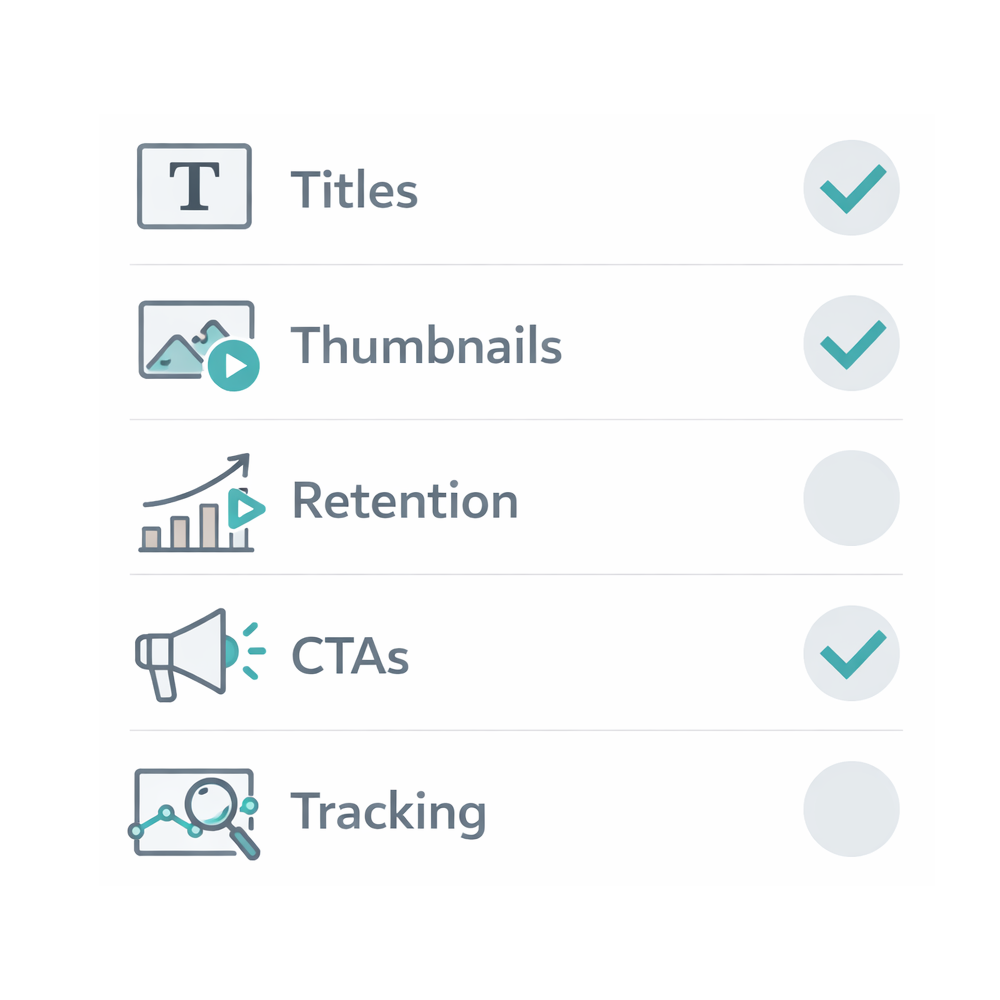
**Alt text:** Minimalist checklist illustration on a white background with five items—Titles, Thumbnails, Retention, CTAs, and Tracking—each shown with a clean line icon and a checkmark in light gray with subtle teal accents, flat vector SaaS-style design.

Designing the funnel is only half the battle - you also need to optimize your channel and videos so they perform. YouTube success depends as much on execution and consistency as it does on strategy.

Optimize for Search: Treat YouTube like a search engine. Research keywords your audience is actively searching for and incorporate them into video titles, descriptions, tags, playlists, and channel keywords. Clear, keyword-rich titles and descriptive context dramatically improve discoverability on both YouTube and Google.

Create Compelling Thumbnails: Thumbnails determine whether viewers click. Use high-contrast visuals, minimal text, and clear value or curiosity cues. Strong thumbnails paired with strong titles drive higher click-through rates and bring more viewers into your funnel.

Increase Retention & Watch Time: Audience retention is one of YouTube’s most important ranking signals. Open with a strong hook, follow a clear structure, and keep pacing tight through thoughtful editing and scripting. Higher watch time not only boosts reach, it increases the likelihood viewers see and act on your CTA.

Be Consistent & Use Playlists: Publish on a realistic, consistent cadence and organize content into topic- or funnel-based playlists. Playlists increase session time, can rank in search, and help guide viewers through a logical content journey. Treat your channel like a landing page — clean, structured, and easy to navigate.

Leverage CTAs & Conversion Tools: Every video should function as part of a conversion funnel. Use Cards, End Screens, mid-video reminders, and links in descriptions and pinned comments to guide viewers to lead magnets or next steps. Track performance using UTMs and CRM integration to tie videos directly to leads, pipeline, and CAC.

Measure & Refine: Monitor YouTube analytics alongside conversion data to identify what drives real revenue. Double down on high-performing topics, thumbnails, and CTAs, and continuously optimize underperforming videos. When performance is tied to business outcomes, YouTube becomes a scalable lead generation channel — not a vanity play.

The GrowthLens Edge: Turning YouTube into a Revenue Engine

By now, it’s clear that YouTube success for B2B isn’t about going viral — it’s about strategic execution tied directly to revenue. That’s where GrowthLens is different. We’re not a video production shop. We’re a YouTube marketing agency and growth partner that builds end-to-end lead generation engines.

First, we treat YouTube as a search-driven platform, not a social channel. Our content is engineered to be discovered by buyers actively searching for solutions, functioning as an extension of Google search. While many agencies chase short-lived engagement, we focus on evergreen, search-optimized videos that compound over time and consistently attract high-intent prospects.

Second, we operate full-funnel. GrowthLens designs the strategy, produces and optimizes videos, creates custom thumbnails, and installs conversion tracking and analytics. The result is a fully optimized YouTube ecosystem — not built for views, but for measurable outcomes like leads, pipeline, and revenue. We turn underperforming or empty channels into pre-sales engines that educate, nurture, and qualify buyers around the clock.

Third, our approach is data-driven and ROI-focused. From day one, we define clear KPIs and tie performance back to business results. We monitor what’s working, double down on winning topics, and continuously refine the strategy. Clients choose GrowthLens because we speak the language of ROI and have the case studies to prove it — across SaaS, healthcare, finance, and other high-consideration industries.

Finally, we make YouTube easy and scalable for lean teams. We act as an extension of your marketing function, handling the heavy lifting while keeping collaboration simple. Whether fully outsourced or working alongside an internal team, our goal is the same: turn YouTube into a predictable, high-ROI growth channel.

By partnering with GrowthLens, you’re not just getting videos — you’re getting a repeatable system to attract and convert high-intent buyers on one of the world’s most powerful platforms.

Get Your Free YouTube Channel Audit 🎁

To help B2B companies uncover their missed opportunities on YouTube, GrowthLens is currently offering a Free YouTube Channel Audit. This is a no-obligation offer where our experts will review your channel (or your competitor’s, if you don’t have one yet) and identify where you’re leaving leads on the table. We’ll show you what to repurpose first, how to package your content better, and how to start driving significantly more leads in weeks – not months.

Reach out

Take the first step to turning your YouTube channel into a lead generation machine.
Thank you! Your submission has been received!
Oops! Something went wrong while submitting the form.