The most effective YouTube funnel for B2B businesses has three stages: attract the right problem-aware audience, build trust through education, and convert attention into sales using proof-driven content and clear calls to action.
Most B2B companies do not fail on YouTube because their content is bad. They fail because there is no system behind the content.
Views alone do not create pipeline. Virality does not equal revenue. Without a funnel, even well-produced videos turn into a content cost center rather than a growth asset.
High-consideration buyers behave differently. They research deeply, compare options, and look for signals of real expertise long before booking a call. YouTube works when it supports that decision process instead of trying to shortcut it.
Every effective B2B YouTube strategy follows the same underlying structure, regardless of industry, deal size, or sales cycle.
The funnel has three stages:
When content is intentionally mapped to these stages, YouTube becomes a predictable inbound channel instead of a guessing game.
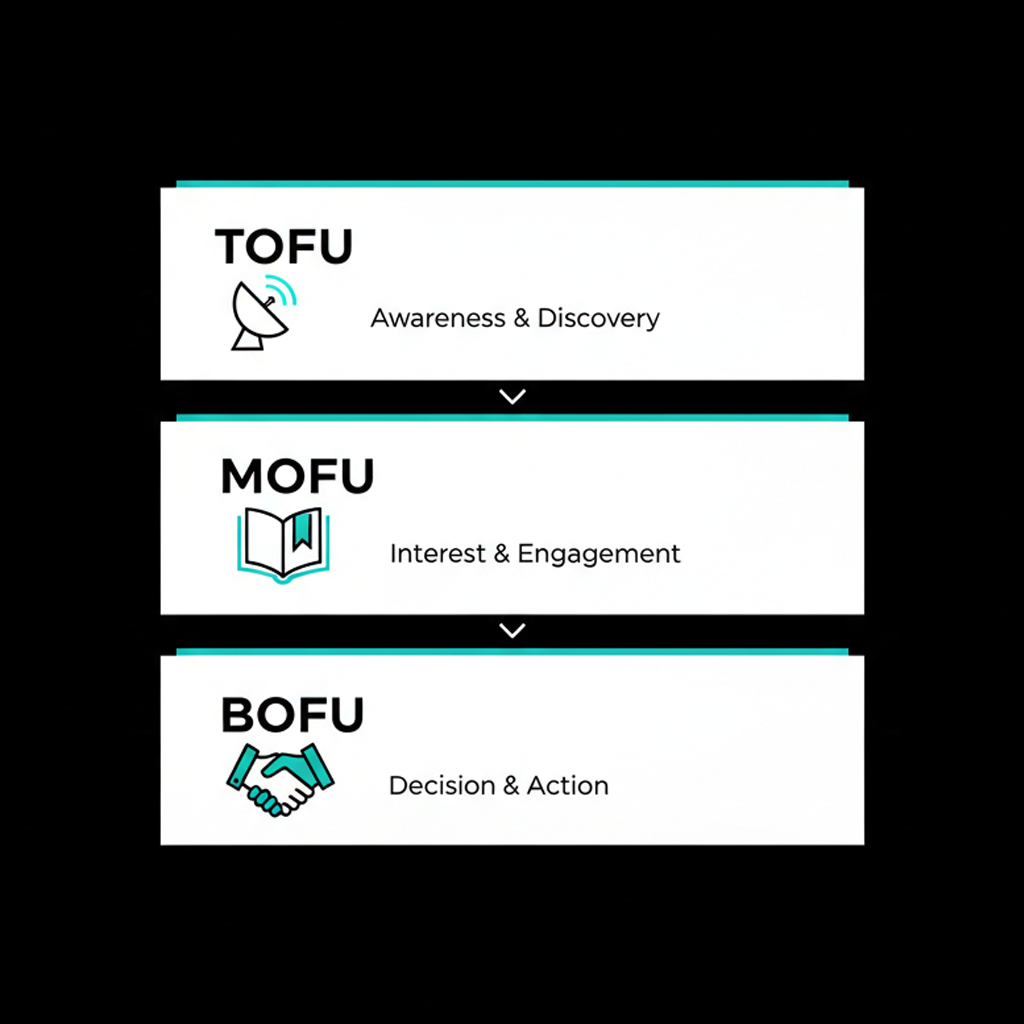
Top-of-funnel content exists to attract problem-aware buyers, not everyone.
In B2B, lower view counts are often a positive signal. The more specific the problem you address, the more qualified the audience becomes.
Search-driven, problem-aware content performs best at this stage. This includes:
The goal is relevance, not reach.
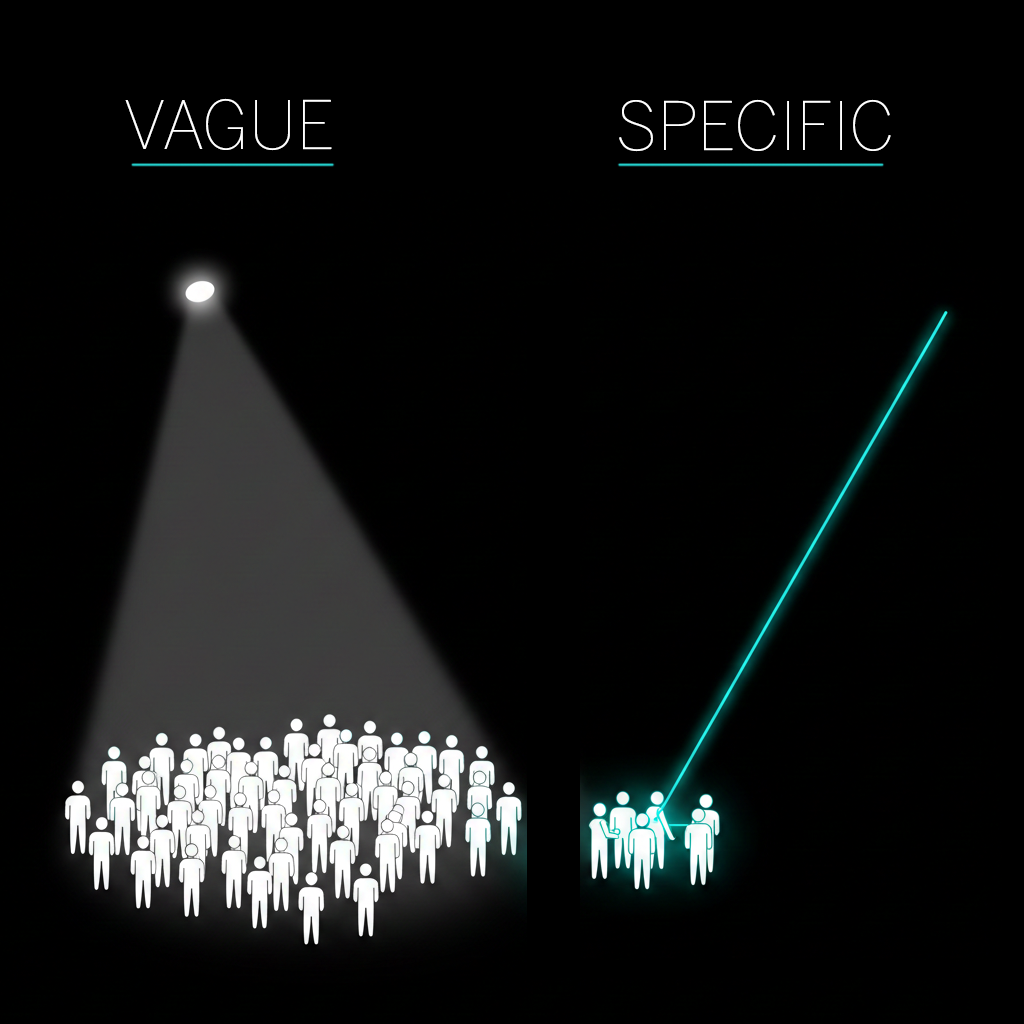
Vague titles attract the wrong audience and confuse the algorithm.
Examples:
The same logic applies across industries:
Specificity trains YouTube to understand who your content is for and trains viewers to associate you with solving a defined problem.
Calls to action should be low pressure.
Top-of-funnel content is about attraction, not conversion.
Middle-of-funnel content is what turns attention into trust.
If top-of-funnel content helps the right people find you, middle-of-funnel content gives them a reason to stay.
There are four high-impact content types at this stage.
When buyers hear their concerns addressed clearly, trust compounds.
CTAs should still be low friction:
At this stage, the content does most of the selling.
Bottom-of-funnel content exists to close the gap between trust and action.
By the time a viewer reaches this stage, they already:
Only a few formats are needed:
Showing how you created outcomes for others removes the final layer of uncertainty.
Be direct.
Viewers at this stage are often more than halfway sold because they have already spent significant time with your content.
Consistency matters more than volume, but structure matters most.
Best for new channels.
Each month, refine titles, hooks, and CTAs based on performance.
Best for teams or faster momentum.
Use early data to improve packaging, retention, and conversion paths.
The key is keeping viewers inside your funnel, not chasing one-off wins.
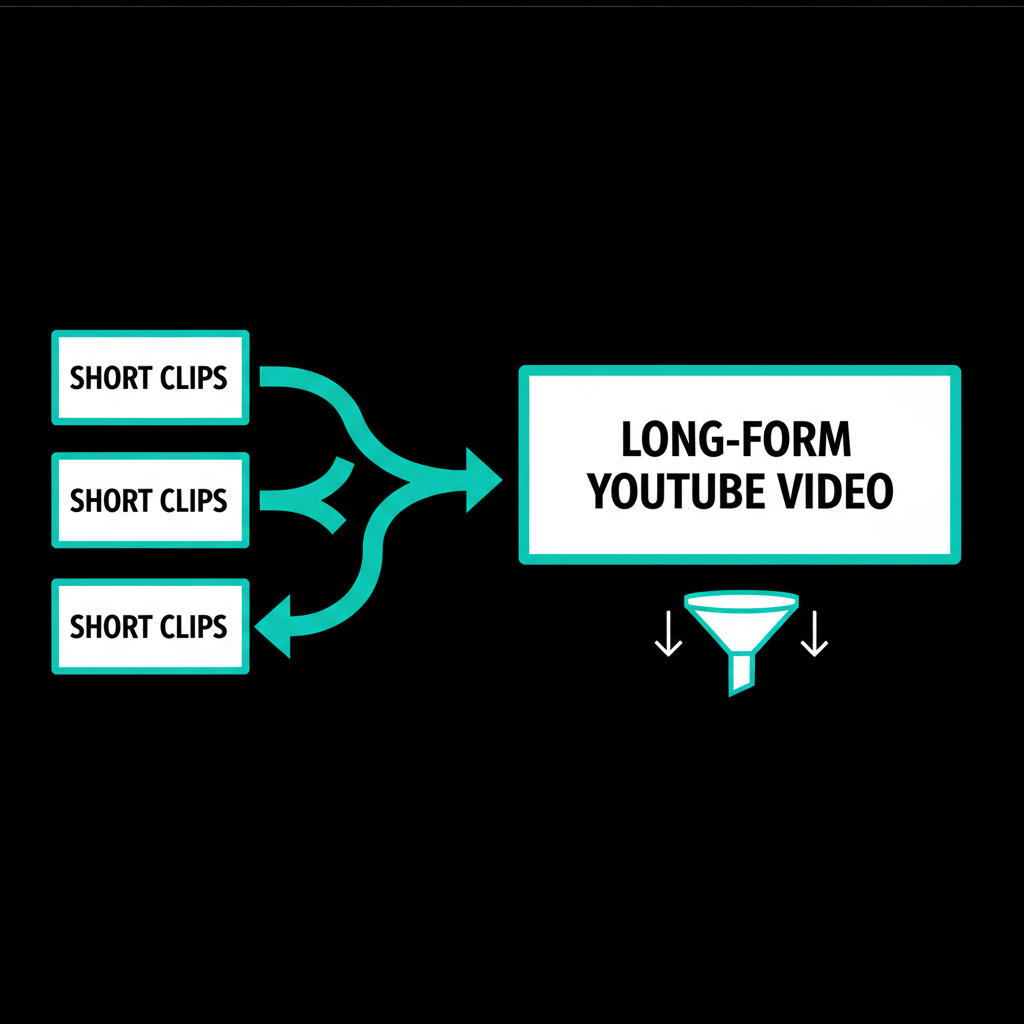
Long-form builds depth and trust. Short-form builds speed and distribution.
When each long-form video is repurposed into multiple short clips across LinkedIn, X, Instagram, or TikTok:
Short-form is the amplifier. YouTube is the asset.
Most B2B YouTube channels fail because they over-index on one stage of the funnel. Some chase views. Others sell too early.
When attraction, trust, and conversion work together, YouTube becomes a compounding inbound engine rather than a content experiment.