
Picture this: a potential customer asks an AI assistant a question about the exact problem your product solves. But instead of your nicely keyword-optimized blog post, the AI pulls up an answer citing a YouTube video – likely not yours. This scenario is unfolding daily as buyers shift from typing searches into Google to asking conversational questions in AI platforms. In fact, half of consumers now intentionally use AI-powered search engines to guide their purchasing decisions.
This is a tectonic shift. AI-driven tools like ChatGPT, Google’s Gemini, Claude, and Perplexity are quickly becoming the first stop for research. Rather than listing a dozen links like a traditional search, these AI platforms deliver a single, consolidated answer – often with citations to sources they trust. If your content isn’t among those sources, you simply don’t exist in that moment. For B2B brands in high-consideration industries, this is a wake-up call: AI search visibility is now critical to staying on your buyer’s radar.
So how do you ensure your company is “the answer” an AI provides? The emerging evidence points in one clear direction: YouTube. High-quality YouTube videos are fast becoming the favored resource for AI answers. Let’s explore why this is happening and how you can act immediately to capitalize on it.
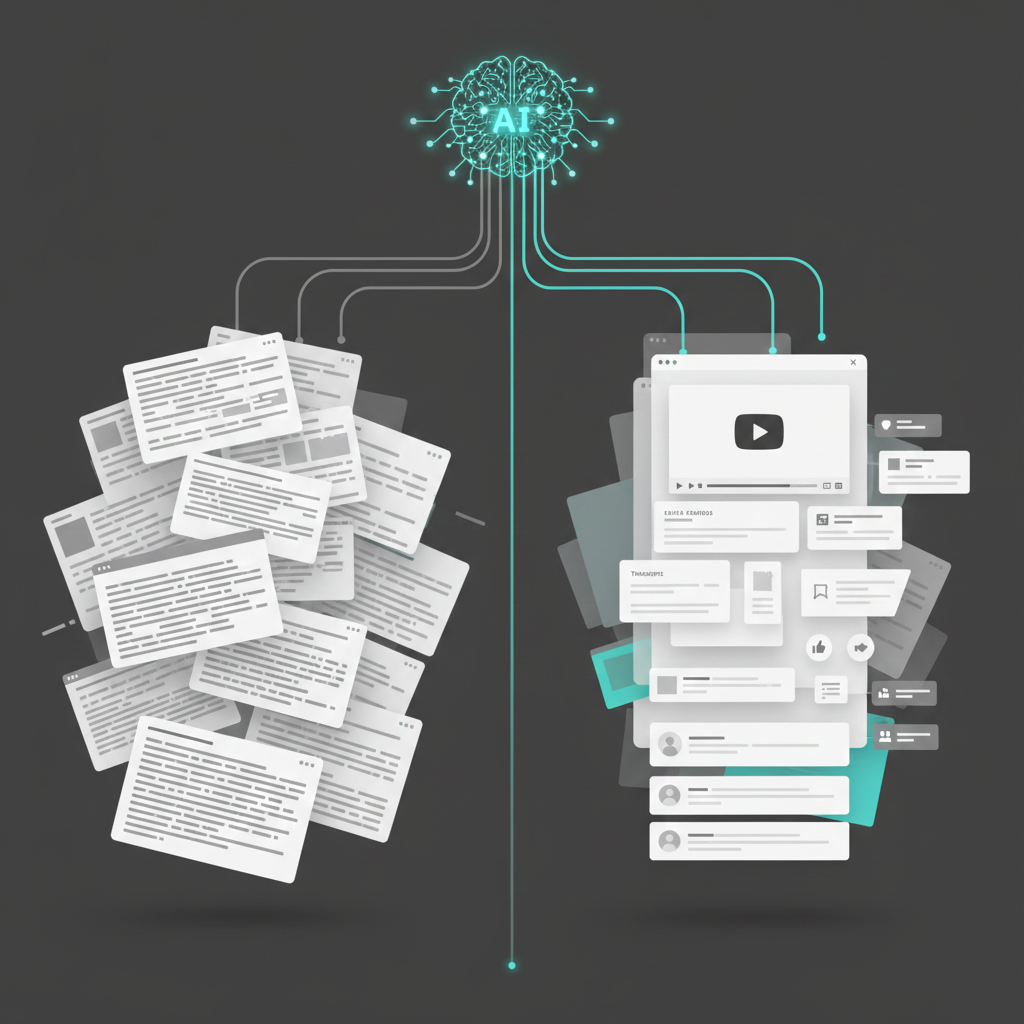
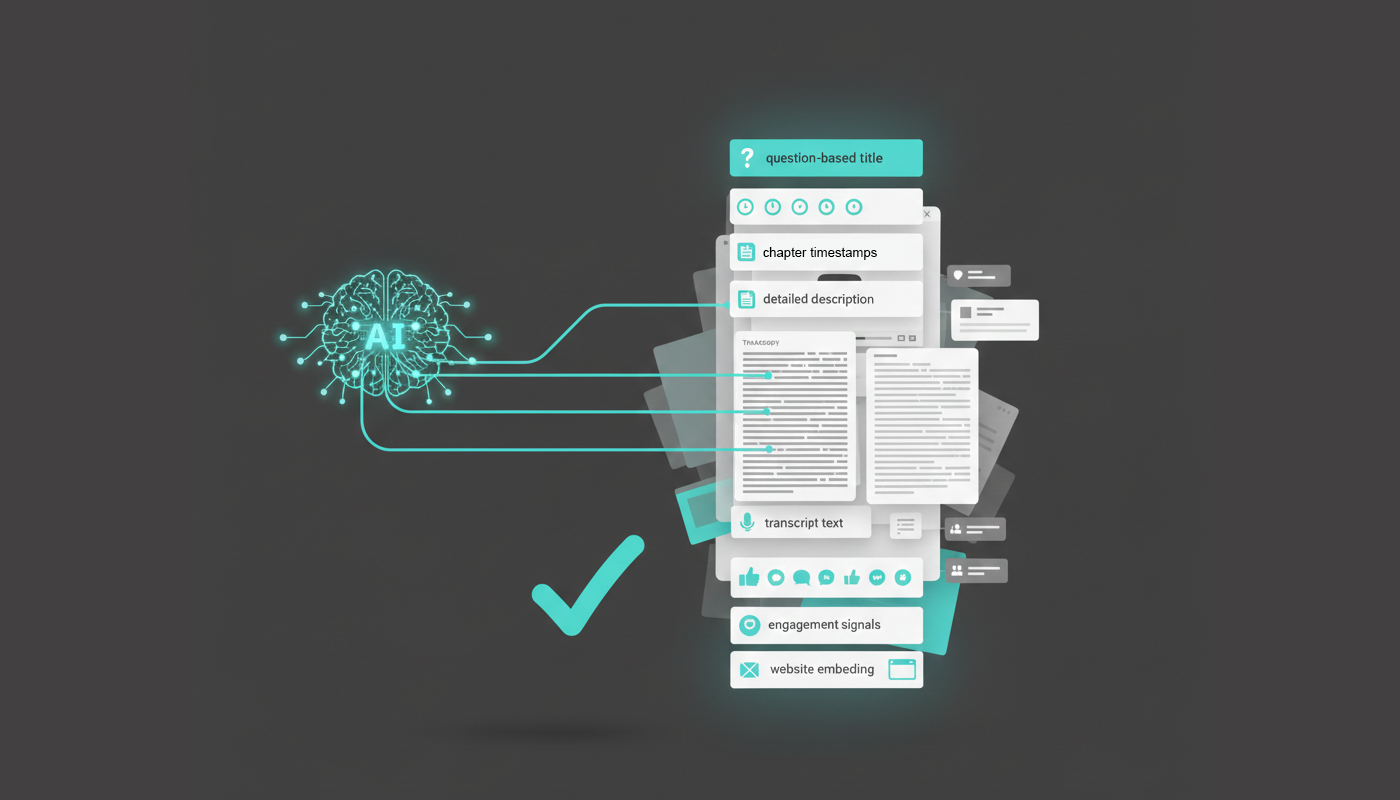
Traditional text content (blogs, forums, even Reddit threads) used to dominate online search results. But AI search engines have flipped the script. Large language models (LLMs) like those behind ChatGPT and other AI assistants have a much easier time processing structured, rich media content ,and YouTube provides exactly that. Each YouTube video comes packaged with a transcript, captions, chapter timestamps, descriptions, titles, comments, and engagement metrics. This treasure trove of machine-readable metadata makes YouTube a friendlier source for AI than a plain blog article.
Think of a typical LinkedIn post: it’s unstructured text that an AI has to parse through and interpret. Now think of a YouTube video page: it basically hand-feeds the AI a structured outline of the content. Transcripts provide the full text of the video’s narration. Section headers or chapters segment the topics. The description and tags highlight keywords. User comments and likes indicate engagement and credibility. In short, YouTube videos come pre-formatted in ways AI can easily digest, whereas most websites do not.
It’s no surprise then that AI models are citing YouTube more and more often. YouTube has already overtaken Reddit as the most-cited social platform in AI-generated responses. This is a dramatic reversal – Reddit’s text-based discussions used to be a go-to resource for AI, but now 16% of AI answers cite YouTube vs. 10% cite Reddit. The shift happened because video content is no longer a black box to AI. Modern models can “read” video transcripts and see all that contextual data. As one Adweek analysis put it, the transcripts and explainers accompanying videos have allowed YouTube to flourish as a source that machines can easily read.
For B2B marketers, the implication is huge: your buyers’ AI assistants prefer to pull insights from YouTube videos (which often feature experts speaking directly to camera or demonstrating solutions) over scraping random blog paragraphs. A well-optimized video on your channel can suddenly become the referenced authority when a prospect asks, “How do I solve XYZ problem?” Meanwhile, your competitor’s glossy 2,000-word blog on the same topic might be ignored by the AI. In the new world of AI search, structure and clarity win – and YouTube gives you structure on a silver platter.
Having a YouTube channel isn’t enough. To ensure your videos get picked up by AI search engines and virtual assistants, you need to treat YouTube GEO best practices as non-negotiable. The good news: optimizing for AI overlaps a lot with optimizing for human search. By making your video content clear, well-organized, and relevant, you simultaneously please the algorithms of YouTube, Google, and AI models scanning for reliable answers. Here are key best practices to implement immediately for maximum AI search visibility:
You want your videos to be the ones that AI search engines deem worthy of quoting. Each best practice above is about structuring your content for clarity. The clearer your content, the easier an AI can recognize its value and pluck it out as the answer to a user’s query.

How does all this translate specifically for B2B and SaaS companies in the U.S. with lean marketing teams? In high-consideration B2B marketing, building trust and authority is everything. Your sales cycles are long, your prospects need education, and multiple stakeholders are involved. YouTube excels in this environment by putting a face and voice to your expertise, and now AI platforms are amplifying that advantage by giving well-crafted videos prime real estate in search answers.
To leverage YouTube for B2B marketing effectively, you need a strategic content approach that aligns with your buyer’s journey and the questions they are asking. Start by researching what common questions your ideal customers pose to AI or search engines. These could be broad “why” or “how-to” questions at the top of the funnel, as well as detailed comparisons or ROI-focused questions closer to purchase. Each of these queries is an opportunity to create a video that becomes the trusted answer. For example, if you know prospects often ask, “What’s the best [category] solution for [pain point]?”, create a thought leadership video addressing that question head-on.
B2B buyers crave educational, thought-leadership content. Rather than overt pitches, your videos should offer valuable insights – the very insights an AI might highlight in an answer. Test out a strategic mix of content types: how-to tutorials, mini webinar-style explainers, customer case study videos, and Q&As on industry trends. This will help you figure out what resonates with your audience and double-down on that format. It's not about going viral to millions; it’s about deeply resonating with the right people in your niche. And those are precisely the people asking detailed questions that AI assistants are fielding.
Crucially, make your video content repurposeable. A lean marketing team must get maximum mileage from every piece. One YouTube video can be sliced into short LinkedIn clips, summarized in a blog post (embedded with the video for GEO boost), and referenced in sales collateral. This content flywheel not only saves time, it amplifies your message across channels – improving both traditional SEO and AI search visibility. Consistency across these platforms will reinforce your brand’s expertise to the algorithms watching.
Remember that production value matters in B2B. You’re asking busy professionals to spend time watching your video; good lighting, clear audio, and a polished delivery go a long way to establish credibility. Video structure and pacing is key to yielding better user engagement (watch time, likes, shares), which in turn signals to AI that your content is authoritative. It’s a virtuous circle: authoritative content leads to engagement, which leads to AI visibility, which then leads to more human viewers discovering your brand.
Finally, approach YouTube not as a standalone channel but as an integral part of your B2B marketing strategy. In the era of AI-driven search, the goal is to be everywhere your buyer might look for answers. Your prospective client might see an AI summary citing your video, then later visit your YouTube channel for more, then click to your website. By strategically placing video content at the center of your marketing, you ensure that whether a human or an AI is doing the searching, your brand’s voice is the one that gets heard.
Let’s address the elephant in the room: ROI. B2B marketers have to justify every investment, and YouTube is often seen as a long game. So, how do you measure the return on your video content strategy, especially as it relates to AI search visibility? The key is to set the right expectations and track both leading indicators and lagging results.
First, understand that YouTube and GEO marketing are marathons, not a sprints. Unlike a paid ad campaign, you won’t have tons of leads pouring in after a week. It typically takes 6–9 months to start generating a meaningful ROI from consistent organicefforts. That might sound long, but the payoff is that videos you publish today can continue yielding views, leads, and AI citations for years. They become evergreen assets working 24/7 for your brand. (Contrast that with a Google ad: it stops delivering the moment your budget runs dry.)
In those initial months, focus on leading indicators of success. Are your video’s views, watch times, and subscriber counts rising steadily? Are people engaging via comments or sharing the content? Importantly, are you noticing improved search engine rankings for your videos or your website pages that embed the videos? For example, if your YouTube video on “YouTube SEO best practices” starts ranking on Google or getting referenced by others, that’s a strong signal. Even more directly, you might begin to see your videos mentioned in responses from AI tools (some businesses have reported their YouTube videos being cited by name in tools like Bing Chat or Perplexity when users ask related questions).
Over time, these indicators translate to the metrics the C-suite cares about: website traffic, lead volume, and ultimately revenue. Measuring ROI from YouTube marketing should include attribution tracking for when viewers of your videos convert on your site. Create trackable links for YouTube viewers (in video descriptions or pinned comments) leading to your landing pages. Ideally create a YouTube-specific landing page. Encourage anyone who books a demo or downloads a whitepaper to indicate how they found you – you’ll likely start seeing YouTube and even “ChatGPT” or “AI assistant” in those responses as your content gains traction.
It’s also critical to measure the quality of leads from YouTube. Our experience (and likely yours, as it grows) shows that leads who engage with your video content tend to be higher intent and better educated. By the time they hop on a call, they’ve essentially pre-qualified themselves by consuming your thought leadership. This can shorten sales cycles and increase close rates – an indirect ROI benefit of YouTube content that should be measured (for instance, track the sales cycle length for leads who watched X videos vs. those who didn’t).
One more thing: compare the cost and longevity of YouTube content to other channels. A single well-produced video might cost a few thousand dollars, but if it yields even a handful of high-value clients over its lifetime, the ROI dwarfs what you’d get from spending the same money on short-lived PPC ads or one-off webinars. And if that video also gets your brand cited in a high-profile AI platform’s answers, the brand exposure is hard to put a price on. The ROI of YouTube marketing compounds over time, as each video builds your AI-search footprint and your library continues to attract views. It’s an investment in a long-term asset – one that your competitors might already be building while you’re still weighing the costs.
Before another buyer asks ChatGPT or Gemini for the solution you offer - and gets your competitor's video - make sure your brand is the one showing up.
We’ve built a fast, strategic self-assessment designed to help you spot exactly where your content is falling short, and what to do about it. This audit helps you: