You need exactly three things to start a business YouTube channel: a smartphone with a rear camera, a basic light source, and an external microphone. A complete starter setup costs under $300, and most founders already own the most expensive piece of equipment: their phone.
The short answer: they overthink the gear. Many founders spend weeks comparing cameras, researching lighting rigs, and trying to build a soundproof studio before recording a single video. Meanwhile, competitors are already publishing content, answering audience questions, building trust, and capturing leads.
This is a costly mistake. Businesses that use video as a primary marketing channel often see meaningful lifts in conversion rates. And the reason viewers subscribe to a channel has very little to do with camera quality or lighting perfection. They subscribe because the content helps them solve a problem or make a decision.
If you are building a YouTube marketing strategy for your business, the single best thing you can do is start publishing. Gear is secondary. Let's break down what you actually need.
There are only three things that determine whether your videos look and sound professional enough for a business audience: a good camera, good lighting, and a good microphone. Here is how to approach each one without overspending.
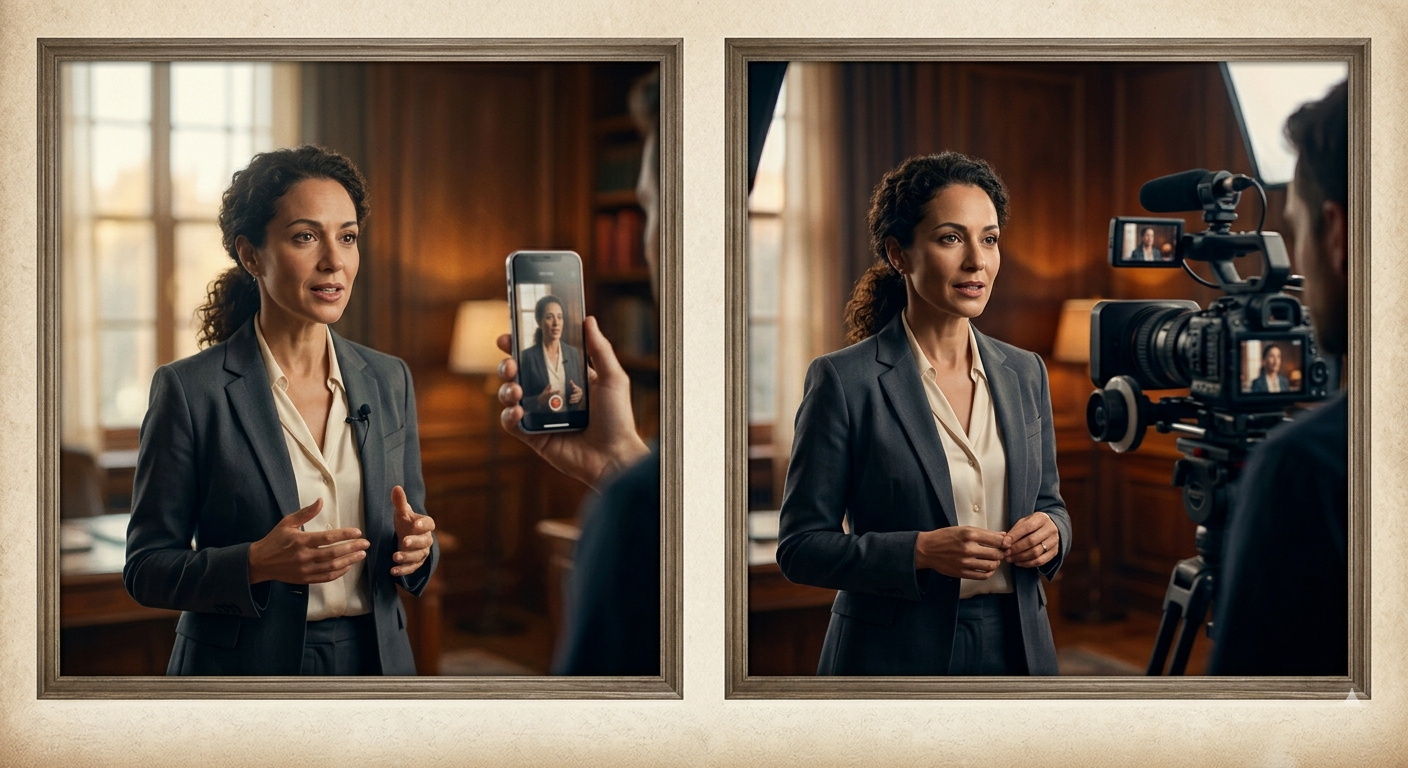
Use the smartphone you already own. Most modern iPhones and Android phones shoot sharp 4K video that is more than adequate for YouTube. Many successful creators, including professionals running B2B channels, use nothing more than an iPhone as their primary camera.
To get the best results from your phone:
Professional cameras like the Sony ZV-E10 or Canon M50 are solid options if your budget allows, but they are not necessary to start. A smartphone with good framing and a stable mount will produce results that look professional enough for any YouTube content strategy for business.
Good lighting is the simplest upgrade you can make. Even the best camera will produce poor-looking video in bad lighting.
In many cases, natural light from a window is all you need. The key is positioning: face the window so the light falls on your face, not behind you. Backlighting creates silhouettes and makes you hard to see.
If natural light is not available or not consistent, a small LED panel or a basic ring light is an affordable solution. These provide steady, even light and are easy to set up in any room. The goal is straightforward: make sure your audience can see you clearly.
Audio is the one area where you should not cut corners. Viewers will tolerate a slightly shaky camera or a cluttered background, but poor audio causes people to click away almost immediately.
The fix is simple: use an external microphone instead of your phone's built-in mic. A compact wireless microphone like the DJI wireless mini mic connects easily to your phone and dramatically improves sound quality.
This single upgrade makes the biggest perceived difference in production value for business YouTube channels.
Here is a realistic cost breakdown for everything you need to start filming professional-looking videos in 2026.

For most founders starting a business YouTube channel, the budget setup between $160 and $270 is all you need. The value of your videos comes from the ideas you share and the problems you help your audience solve, not from expensive equipment.
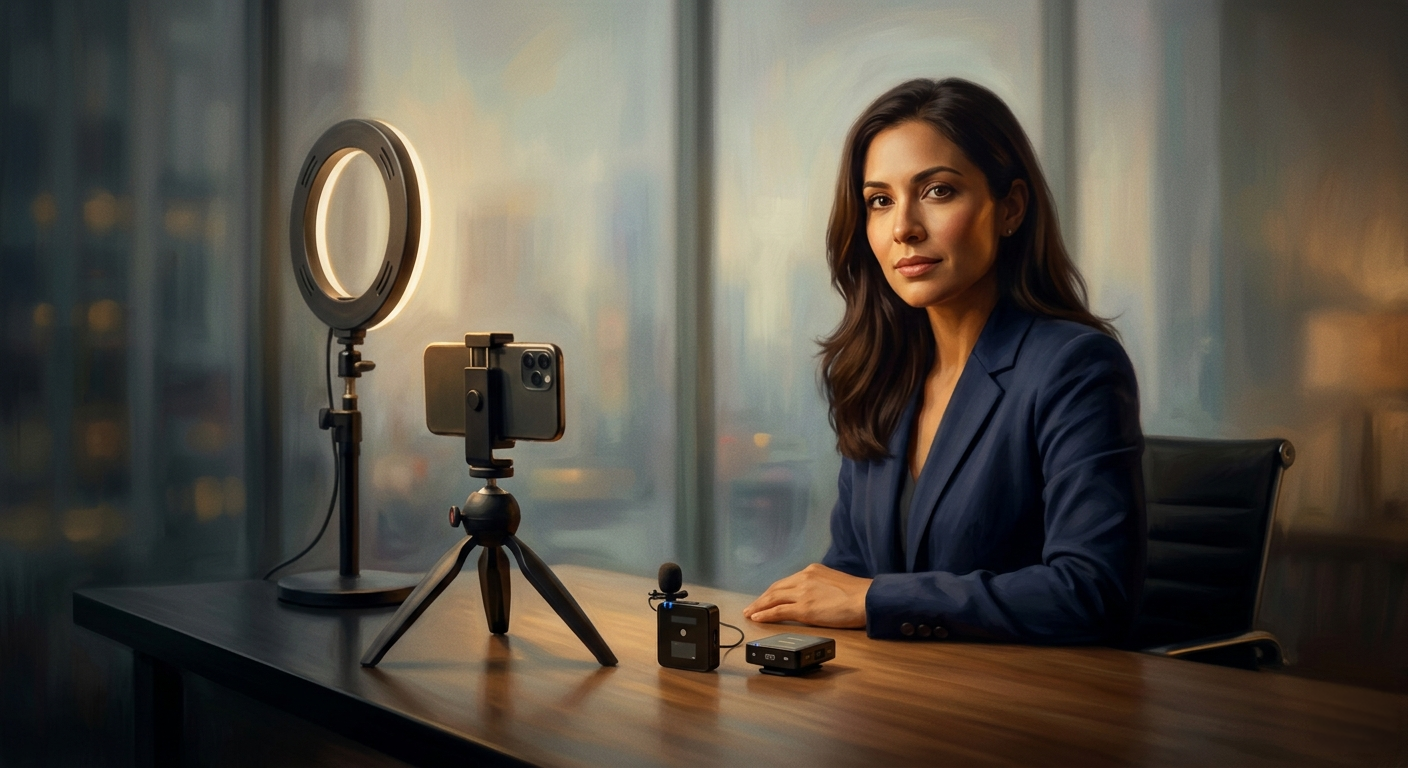
Once your gear is set up, recording is straightforward. There are two common workflows depending on your equipment.
Option 1: Recording on Your PhoneThis is the simplest method. Hit record, and when you are done, AirDrop or upload the footage to your computer for editing. If you are recording frequently and running out of storage, transferring footage to an external SSD keeps files organized and speeds up the editing process.
Option 2: Recording on a Professional CameraIf you are using a camera like the Sony ZV-E10, you will record onto an SD card and then transfer files to your computer. It requires an extra step but becomes routine quickly.
Pro tip regardless of your setup: Record in one continuous take instead of stopping and starting in short sections. This makes filming easier and saves significant time during editing.
Getting your gear sorted is just the first step. The real opportunity for businesses on YouTube is turning viewers into leads and clients. A clear YouTube lead generation strategy connects your video content to a broader marketing funnel: attracting the right audience, building trust through educational content, and converting viewers into qualified prospects.
The businesses that see the best results from YouTube are not the ones with the most expensive setups. They are the ones that publish consistently, answer the questions their audience is actually searching for, and structure their content to move viewers through a buyer journey.
The gear gets you started. The strategy is what generates results.
No. A modern smartphone with a rear-facing camera shoots 4K video that is more than sufficient for YouTube. Many successful business channels are filmed entirely on iPhones or Android phones.
A good external microphone. Viewers will forgive imperfect video quality, but poor audio causes people to leave immediately. A wireless mic like the DJI mini mic costs around $110 and makes a dramatic difference.
Yes. Natural window light works well as long as you position yourself facing the light source. If your recording space has inconsistent or limited natural light, a basic LED panel is an affordable backup.
A complete starter setup costs between $160 and $270, assuming you already own a smartphone. This covers a wireless microphone, basic lighting, and a phone tripod. Professional camera setups can run $1,500 to $2,000 or more.
Keep it clean and distraction-free. A bookshelf, desk, or whiteboard works well. You do not need a dedicated studio. What matters is that the background adds depth without pulling attention away from you.
Record in one continuous take whenever possible. It simplifies the filming process and saves significant time during editing. You can always cut sections during post-production.
Yes. Even minor camera shake makes a video feel unprofessional. A basic phone tripod costs around $50 and keeps your footage stable and clean.
Consider upgrading once you are publishing consistently and have validated that YouTube is driving results for your business. Starting with a smartphone lets you test your YouTube content strategy without a large upfront investment.